
Boulder City is different from the rest of the Las Vegas area because it was planned with deed-restricted growth, historic homes along Wyoming Street and Denver Street, and established trees that were planted long before modern desert landscaping became standard. Many properties still have mature elms, cottonwoods, and desert willows from earlier planting eras, and those trees can now create structural issues and branch overhang that make maintenance more complex. Chop Chop Tree's network of tree removal professionals in Las Vegas knows how to evaluate aging canopy structure, clear limbs away from roofs, and manage pest-related dieback while keeping properties safe and manageable in a demanding desert environment.
These conditions are part of why Boulder City homeowners turn to tree trimming services with confidence.

Prefer to Talk to An Expert?
(702) 323-5754
Why Local Expertise Matters for Your Boulder City Property
Boulder City's historic lot layouts, limited development patterns, and proximity to Lake Mead National Recreation Area make local knowledge especially valuable. Tree specialists in the area use methods and equipment suited to compacted caliche soil, narrow access points, and the strong wind exposure common across the Las Vegas region.
From canopy reduction along Nevada Way near the historic downtown area to deadwood removal on properties near the Boulder City Municipal Golf Course, each project is handled with attention to detail and the long-term condition of the property.
Protect your investment and gain peace of mind. Local experts can help keep your trees sound, attractive, and secure for the years ahead.
Our Tree-Removal Services in Las Vegas, NV, Include
Tailored Tree Services for Boulder City's Unique Properties
Because Boulder City has mature trees and limited lot access in many areas, tree work requires a custom plan rather than a one-size-fits-all approach. Local crews build solutions around each property's layout, including overhead utilities, nearby foundations, and root spread.
Whether your property is a historic bungalow in Old Town, a mid-century ranch near Adams Boulevard, or a newer home close to the Boulder City Parkway corridor, the right service plan should reflect the site's actual conditions.
Full-service options such as professional tree pruning, reliable stump removal, quality landscaping, and expert shrub removal should be matched to your property's needs and the character of the neighborhood.
The History of Boulder City and Its Impact on Tree Care Today
Boulder City began in the early 1930s as a federal town for workers building Hoover Dam, and it remains one of the few places in Nevada with strict land-use controls and a preserved historic center. That history still shapes tree care today, especially where older root systems sit beneath paved areas, tree species struggle under rising desert heat, and original construction fill has left soil heavily compacted. Addressing these conditions requires specialized experience.
Aging Tree Structure and Canopy Decline
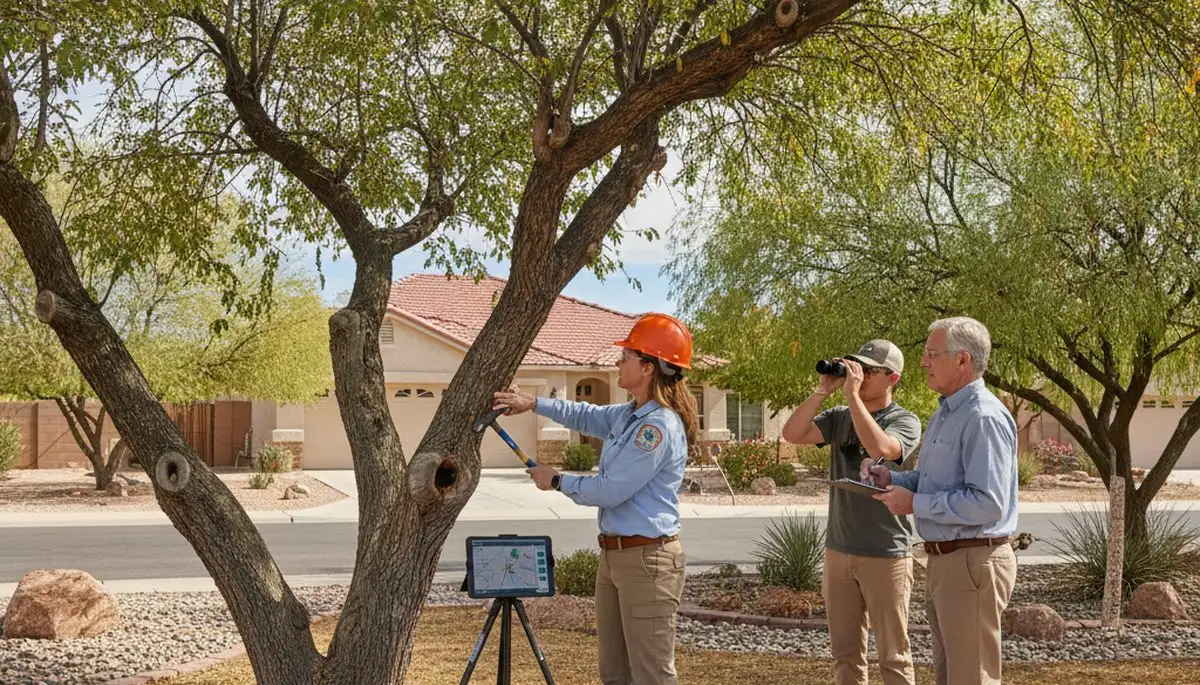
In Boulder City, especially in the historic residential grid near Park Street and the older blocks off Arizona Street, many property owners deal with mature trees that have weakened over time because routine maintenance was delayed. That often leads to the risk of heavy limb failure and possible storm damage to roofs and fences, creating real safety concerns.
The network of tree service pros handles these problems with planned canopy thinning, focused deadwood removal, and structural pruning that guides growth away from nearby structures and helps prevent repeat issues.
Caliche Soil and Root System Stress
Boulder City's desert setting offers good drainage in some places, but it also brings soil challenges such as caliche hardpan beneath shallow topsoil. When roots are restricted by this dense layer, trees can develop crown dieback and become less stable during high winds, which are common in the area.
Local pros address these conditions with deep soil aeration, targeted root zone care, and planting adjustments based on the species and soil profile, using methods that fit Boulder City's compacted ground conditions.
Heat Stress and Desert Climate Damage
Years of intense summer heat have left many established Boulder City trees stressed and unable to maintain full, healthy canopies. Cottonwoods and non-native ornamental trees planted in earlier decades are especially vulnerable to leaf scorch and branch dieback.
Trusted professionals respond with selective crown reduction, careful branch removal, and species-specific supplemental care to improve canopy condition and support stronger long-term structure.
Wind Exposure and Storm Debris Risk
Seasonal wind in the Las Vegas region can be harsh, and Boulder City property owners often deal with broken branches and scattered debris, especially on lots near open desert land along the Lake Mead boundary.
Experienced teams reduce these risks through proactive canopy management, crown raising, hazard limb inspections, and post-storm debris cleanup to improve wind performance and limit weather-related damage.
Narrow Access and Equipment Constraints
Many Boulder City properties have restricted access, which makes equipment placement and debris removal more complicated, especially where side yards are narrow or mature landscaping borders walkways.
Compact aerial equipment and hand-climb rigging techniques allow crews to complete precise canopy work while minimizing disruption to the surrounding landscape.
Ready to improve your Boulder City property? Call (702) 323-5754 today to schedule a free, no-obligation consultation with a local expert.
Expert care for every property. Trust Chop Chop Tree to find you reliable solutions.

Kick Off Your Tree Removal Project Today!
(702) 323-5754Comprehensive Tree Trimming Services for Boulder City, NV
Local, year-round service helps keep your property safe, maintained, and in step with Boulder City's preserved residential setting. Review the options below to find the right fit.
Regular Tree Trimming Services in Boulder City, NV
- Canopy clearance trimming along Nevada Way - Removing low branches that interfere with sidewalks and vehicle access on properties near Boulder City's main commercial corridor.
- Utility line clearance near Wyoming Street - Cutting back limbs that are growing toward overhead power and communication lines in older neighborhoods where trees have outgrown their original planting areas.
- Ornamental tree shaping near the Boulder City Historic District - Preserving the appearance of decorative trees near protected historic properties through hand-pruning that maintains their natural form.
- Seasonal trimming for desert willow and palo verde - Timing trimming around the growth cycles of regionally appropriate trees to limit water stress and support balanced canopy growth. Homeowners near tree trimming services in Henderson, NV deal with similar seasonal timing needs.
- Roofline clearance trimming on residential lots off Adams Boulevard - Managing branches that extend over roofs and can hold moisture on roofing materials during monsoon season, which helps reduce surface wear.
Plan routine trimming before summer temperatures peak so established trees stay under less stress and your property is better prepared for monsoon season.
Intensive Tree Pruning Services in Boulder City, NV
- Structural pruning for aging elms and cottonwoods - Correcting years of unmanaged growth by removing competing leaders and redistributing canopy weight to lower the chance of failure in mature trees.
- Crown restoration pruning after storm damage - Rebuilding balanced canopy structure after major limb loss from wind events with expert tree pruning methods appropriate for desert species recovery.
- Root collar excavation and basal pruning - Removing girdling roots and relieving soil pressure at the base of established trees to support healthy vascular function and improve longevity on older lots.
- Deadwood extraction on large-canopy shade trees - Clearing unsafe dead limbs from mature trees near the Boulder City Municipal Golf Course and nearby homes where falling debris can become a hazard.
- Thinning pruning for wind resistance - Opening dense interior canopy on exposed trees near the Lake Mead boundary to reduce wind load and lower the chance of major branch failure during seasonal gusts.
When intensive pruning is completed before summer, stressed trees often stay healthier and emergency service calls are less likely during the hottest part of the year.
Maintenance Tree Services in Boulder City, NV
- Annual inspection and maintenance scheduling - Creating a steady care plan for owners with multiple established trees and spotting early signs of trouble before they become structural concerns.
- Pest and disease monitoring on established landscape trees - Watching for bark beetles, fungal cankers, and mistletoe infestations that commonly affect aging desert trees in Boulder City.
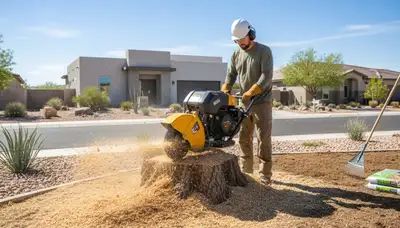
- Stump grinding and site clearing after removals - Finishing removal projects with reliable stump removal to make the space usable again and remove trip hazards from residential lots.
- Soil aeration and mulch ring maintenance - Supporting root health on heat-stressed trees by improving water movement and reducing surface compaction around established trunks. Similar maintenance approaches are used for tree trimming professionals in Searchlight, NV where desert soil conditions create comparable challenges.
- Post-monsoon debris clearance and assessment - Removing fallen limbs, checking storm-related damage, and identifying trees that may need follow-up pruning or removal after Boulder City's summer storms.
Ongoing seasonal maintenance helps keep minor problems from turning into expensive emergency work, supports Boulder City's community appearance standards, and protects landscape value over time.
Emergency Tree Removal Services in Boulder City, NV
- Storm-damaged limb removal and hazard mitigation - Responding quickly when broken or partly attached limbs create an immediate threat to buildings, vehicles, or walkways after wind events.
- Uprooted tree clearing from driveways and access routes - Removing fallen trees that block vehicle access, with special care on narrow lots where equipment placement must be planned carefully.
- Emergency canopy stabilization near power infrastructure - Managing trees or major limbs that have fallen toward or onto utility lines while coordinating with local utility contacts for safe clearance.
- After-hours response for active hazard situations - Supporting Boulder City property owners who need urgent tree service outside normal business hours.
- Post-removal site assessment and debris processing - Completing emergency work with full site cleanup, stump review, and an inspection of nearby trees to identify any additional hazards before the job is finished.
Emergency response in Boulder City takes the city's limited access roads and nearby protected recreation areas into account so urgent work can be completed safely without creating new risks.
Boulder City Homeowner Reviews for Tree Trimming Services
See why Boulder City residents rely on Chop Chop Tree to help them find trusted local tree trimming professionals.